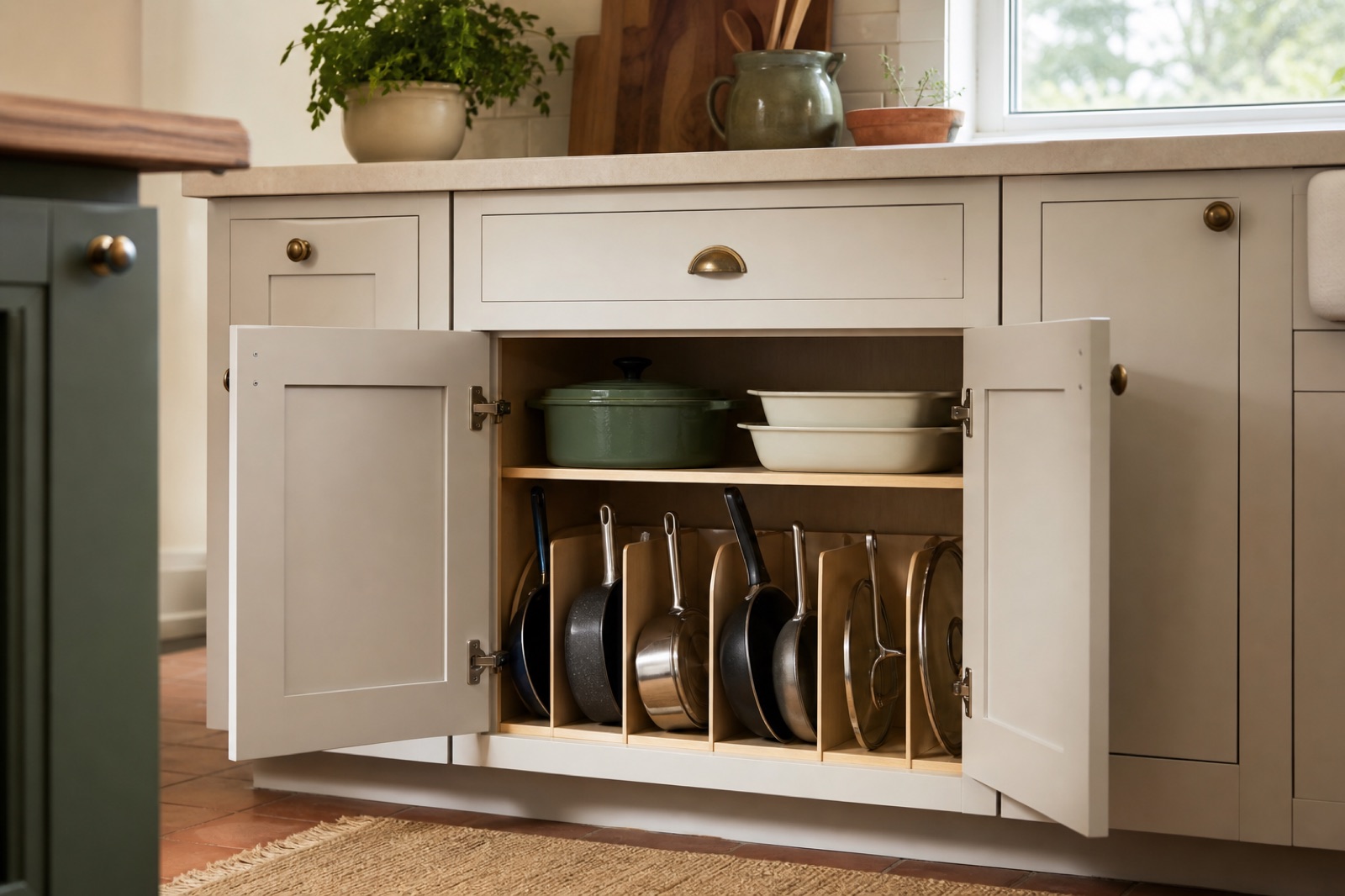
Cookware storage is a weight-and-access problem. The right system makes the pan you use most easy to remove without lifting an unstable stack or reaching around sharp metal edges.
Research boundary
What this guide is—and is not.
This guide compares storage approaches using space planning, access, load, and installation constraints. It does not claim hands-on testing of a specific retail product. Any future product recommendation must satisfy the measurements and limitations stated below.
How our guides are prepared →A practical plan
Start with the space you have.
- 1
Keep only cookware that fits your current cooking routine and appliances.
- 2
Place the heaviest everyday pot between knee and shoulder height.
- 3
Choose one direction for pans—nested, vertical, or hanging—based on cabinet geometry.
- 4
Store lids close to their pots while preventing glass edges from knocking together.
Options worth comparing
Choose the product type after you measure.
These are product types to evaluate—not claims that one item will fit every home. Selected links open a current Amazon search so you can compare dimensions, installation details, availability, and recent customer feedback yourself.
As an Amazon Associate I earn from qualifying purchases.
Simple Houseware expandable pan rack (10 compartments)
- Best for
- Separating skillets, lids, bakeware, and cutting boards
- Check first
- The rack expands from 12 to 22 inches; also allow for its 9.5-inch depth, 8.5-inch height, divider spacing, and projecting handles
- Limitation
- Wide cookware and closely spaced dividers consume more cabinet width than nesting, and heavy cast iron needs a stable supported surface
Pull-out cookware organizer
- Best for
- Deep lower cabinets with a solid mounting surface
- Check first
- Check door opening, hinge position, and loaded slide rating
- Limitation
- Installation is more involved and reduces flexibility
Door-mounted lid holder
- Best for
- Light lids with enough clearance inside the closed door
- Check first
- Test handle depth against shelves and cookware
- Limitation
- Added weight can strain hinges and lids may rattle
Freestanding lid rack
- Best for
- A short row of lids on a shelf or in a deep drawer
- Check first
- Match slot width to lid handles and rim thickness
- Limitation
- Small lids can lean or slip through wide slots
Easy mistakes
What to avoid
- Mounting heavy cookware on drywall without appropriate structure
- Stacking coated pans without protection between surfaces
- Adding a pull-out system that blocks the cabinet hinge
Quick answers
Questions to settle before checkout
Is vertical storage better than nesting?
Vertical storage improves access but uses more width. Nesting saves space when you can lift the stack safely and protect coated surfaces.
Where should glass lids go?
Keep them in stable slots with padded contact and no pressure on the handles. Avoid loose stacks.
Can cabinet doors hold lids?
Only after checking hinge capacity, mounting method, and clearance when the door closes.
Editorial status
As an Amazon Associate I earn from qualifying purchases.
Full disclosure policy →