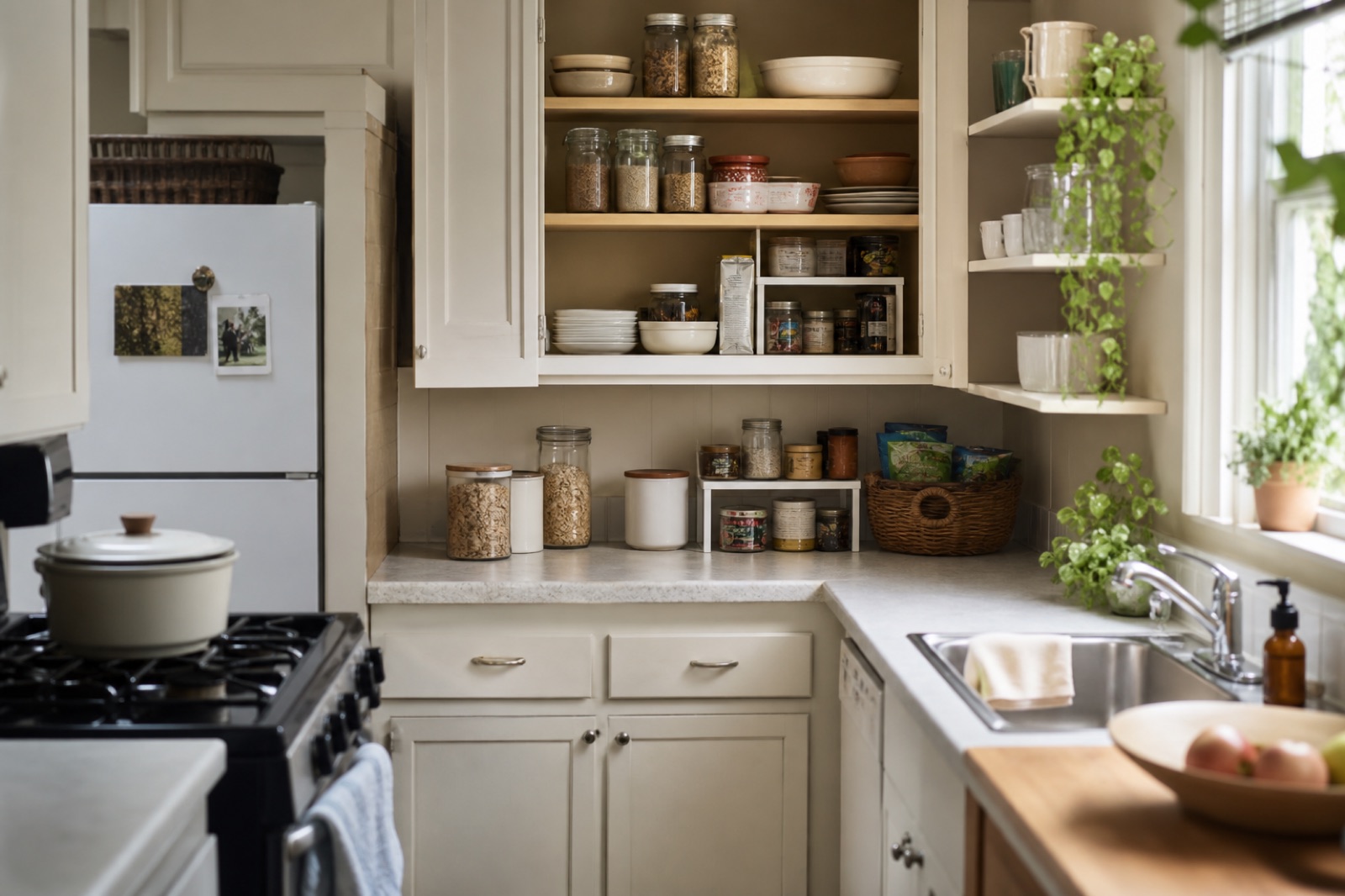
A kitchen without a pantry can still feel predictable. The goal is not to store every category together; it is to create a few repeatable zones that match how you cook and make low-stock items easy to notice.
Research boundary
What this guide is—and is not.
This guide compares storage approaches using space planning, access, load, and installation constraints. It does not claim hands-on testing of a specific retail product. Any future product recommendation must satisfy the measurements and limitations stated below.
How our guides are prepared →A practical plan
Start with the space you have.
- 1
List one week of shelf-stable food and remove expired or duplicate items.
- 2
Place breakfast, cooking staples, snacks, and backstock in separate zones.
- 3
Give prime eye-level shelves to food used several times each week.
- 4
Keep only a small backstock limit so storage does not become a hidden grocery aisle.
Options worth comparing
Choose the product type after you measure.
These are product types to evaluate—not claims that one item will fit every home. Selected links open a current Amazon search so you can compare dimensions, installation details, availability, and recent customer feedback yourself.
As an Amazon Associate I earn from qualifying purchases.
Shelf riser
- Best for
- Cans, jars, and short packages in tall cabinets
- Check first
- Measure internal width, shelf height, and the lip around the riser
- Limitation
- Deep rows still hide labels unless products are grouped carefully
Clear handled bin
- Best for
- Loose packets, snacks, or one meal category
- Check first
- Confirm handle clearance and that the bin can slide past the hinge
- Limitation
- Large bins become heavy and encourage unrelated items to mix
Turntable
- Best for
- Bottles and jars in a corner or deep upper cabinet
- Check first
- Use the full rotating diameter, not just the product width
- Limitation
- Rectangular packages waste space around the circular edge
Over-door rack
- Best for
- Light, shallow packages when the door has safe clearance
- Check first
- Verify door thickness, frame clearance, and total load
- Limitation
- Can mark doors and is unsuitable for heavy glass containers
Easy mistakes
What to avoid
- Buying decanting containers for food you do not purchase consistently
- Keeping heavy backstock above shoulder height
- Splitting the same category across too many hidden locations
Quick answers
Questions to settle before checkout
Do matching containers save space?
Sometimes, but only when their dimensions fit the shelf and the food is purchased consistently. Original packaging is often easier for dates and cooking instructions.
Where should backstock go?
Choose one less-convenient but visible shelf. Limit the quantity so you can check it before shopping.
How many zones are enough?
Start with four: breakfast, cooking staples, snacks, and backstock. Add another only when a real recurring category needs it.
Editorial status
As an Amazon Associate I earn from qualifying purchases.
Full disclosure policy →