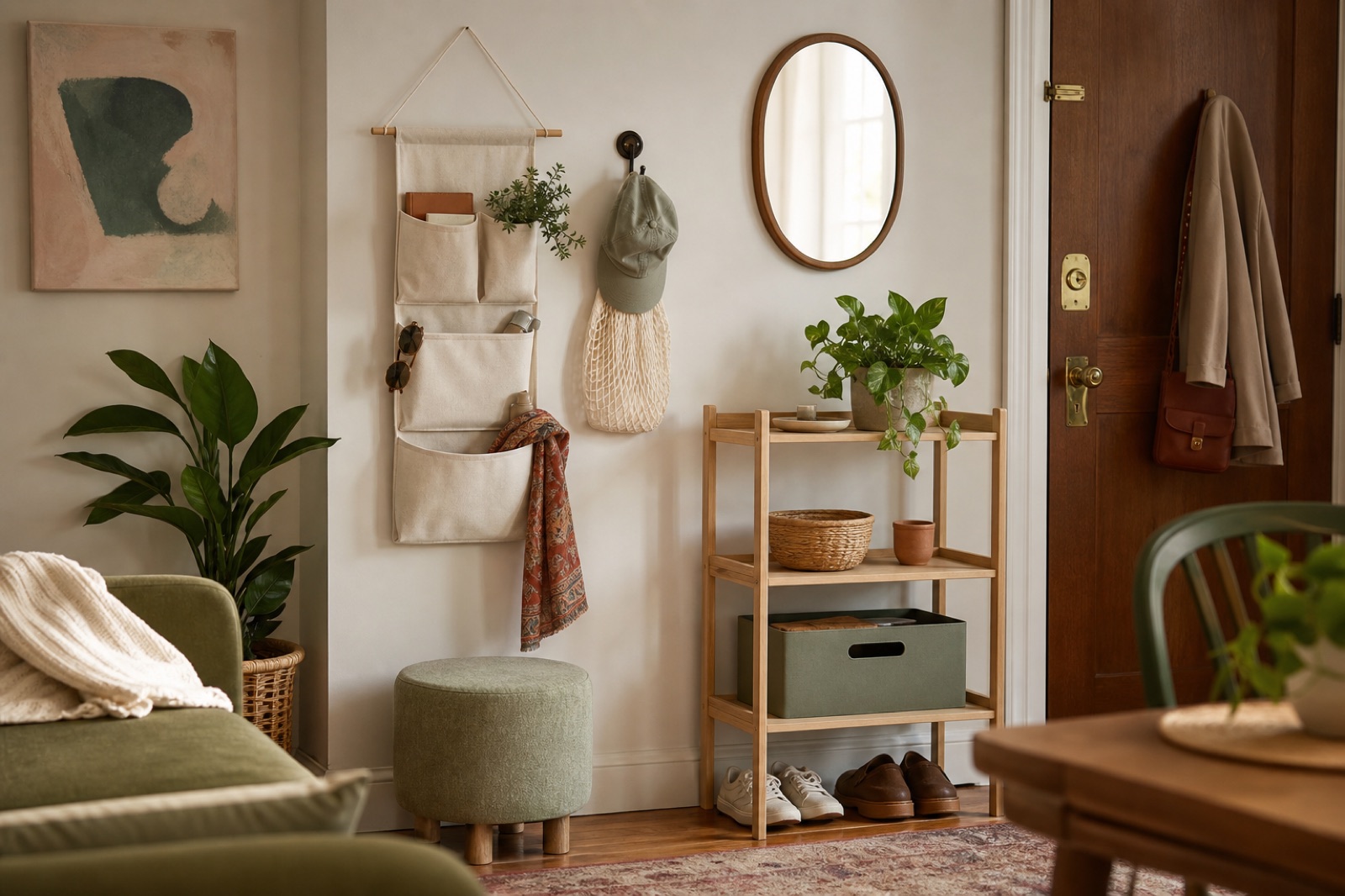
Renter-friendly storage is not damage-proof by default. Adhesives react differently to paint, moisture, heat, and time. Start with freestanding, tension, or over-door options before attaching anything to a finished surface.
Research boundary
What this guide is—and is not.
This guide compares storage approaches using space planning, access, load, and installation constraints. It does not claim hands-on testing of a specific retail product. Any future product recommendation must satisfy the measurements and limitations stated below.
How our guides are prepared →A practical plan
Start with the space you have.
- 1
Read the lease and ask the property manager when the rule is unclear.
- 2
Prioritize storage that stands on the floor or hangs over a suitable door.
- 3
If using adhesive, test an inconspicuous area and follow cure-time instructions.
- 4
Load gradually and keep breakable or dangerous items out of any removable setup.
Options worth comparing
Choose the product type after you measure.
These are product types to evaluate—not claims that one item will fit every home. Selected links open a current Amazon search so you can compare dimensions, installation details, availability, and recent customer feedback yourself.
As an Amazon Associate I earn from qualifying purchases.
Tension shelf
- Best for
- Stable parallel surfaces in closets or utility areas
- Check first
- Verify the permitted span, wall finish, and loaded rating
- Limitation
- Pressure can mark walls and performance drops on uneven surfaces
JARLINK 5-shelf over-the-door organizer (Grey)
- Best for
- Light nursery, bathroom, bedroom, or pantry supplies
- Check first
- Measure door thickness, the gap above the door, handle clearance, and the organizer's loaded depth before relying on the stated 44-pound capacity
- Limitation
- Hooks can scuff the door or prevent it from closing, and a fabric organizer may sway or sag when unevenly loaded
Freestanding ladder shelf
- Best for
- Vertical display and baskets without wall mounting
- Check first
- Confirm anti-tip guidance, footprint, and floor level
- Limitation
- Still may require anchoring in homes with children or pets
Removable adhesive hook
- Best for
- Very light, non-breakable items on approved surfaces
- Check first
- Follow surface, weight, cleaning, cure, and removal instructions
- Limitation
- Paint can still lift, especially on poorly prepared or humid walls
Easy mistakes
What to avoid
- Hanging glass, knives, or heavy objects from removable adhesive
- Assuming every painted wall is compatible
- Using tension poles near fragile tile edges or unstable surfaces
Quick answers
Questions to settle before checkout
Are removable hooks damage-free?
No product is damage-free on every finish. Surface preparation, paint condition, humidity, load, and removal technique all matter.
What is the safest first choice?
Freestanding storage is usually the easiest to evaluate because it does not depend on adhesion or wall pressure.
Can I use tension storage in a bathroom?
Only if the product is rated for the environment and the surfaces are stable, parallel, and not easily damaged by pressure.
Editorial status
As an Amazon Associate I earn from qualifying purchases.
Full disclosure policy →