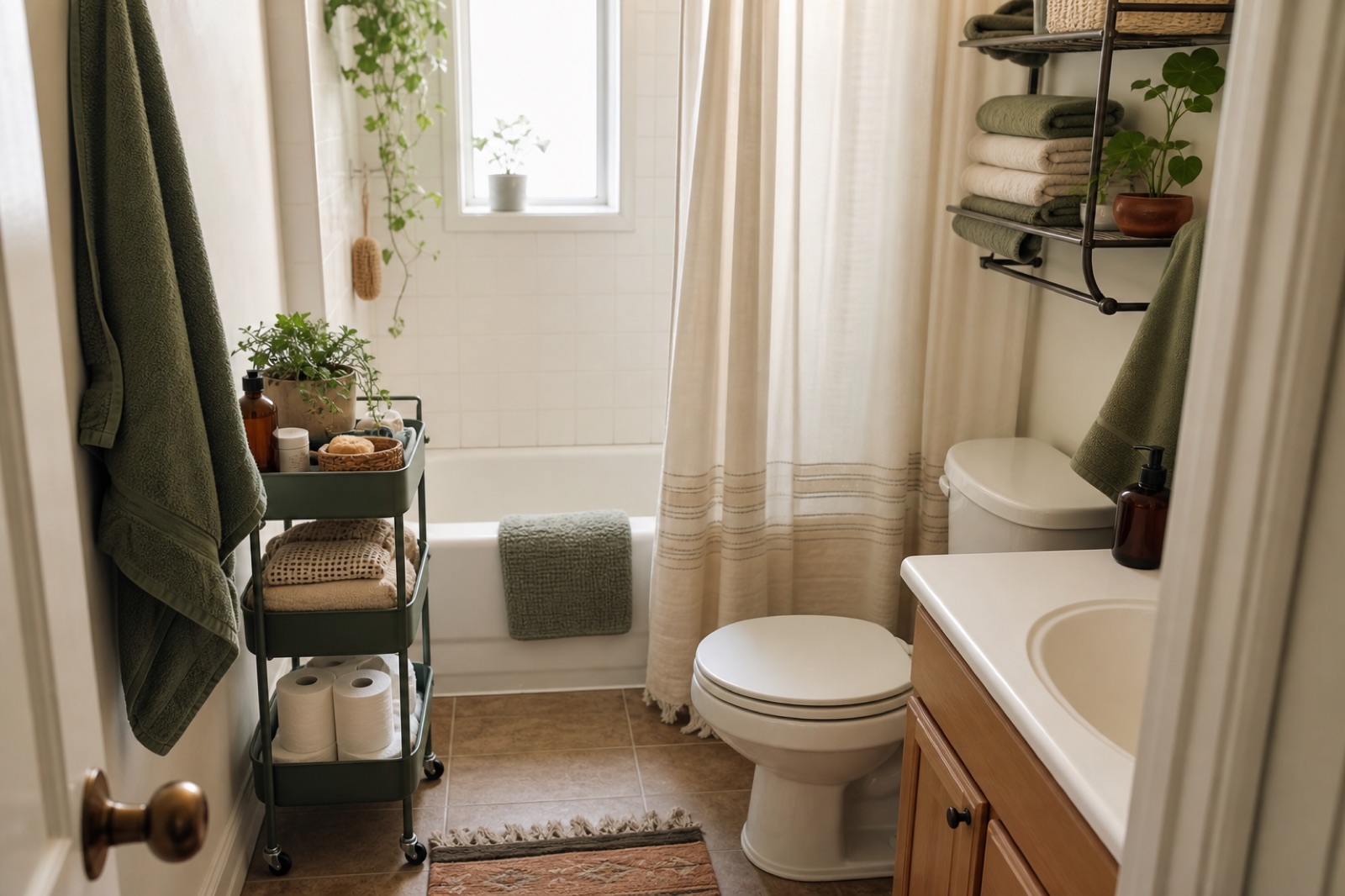
Bathroom storage should shorten the morning routine without trapping moisture or making surfaces difficult to clean. Keep daily items within reach and move backups away from splash zones.
Research boundary
What this guide is—and is not.
This guide compares storage approaches using space planning, access, load, and installation constraints. It does not claim hands-on testing of a specific retail product. Any future product recommendation must satisfy the measurements and limitations stated below.
How our guides are prepared →A practical plan
Start with the space you have.
- 1
Separate daily-use items, occasional items, and sealed backstock.
- 2
Protect the sink area by limiting it to one small washable tray.
- 3
Use vertical space only where it does not block ventilation, towels, or doors.
- 4
Choose materials that can be wiped dry and inspect enclosed areas for moisture.
Options worth comparing
Choose the product type after you measure.
These are product types to evaluate—not claims that one item will fit every home. Selected links open a current Amazon search so you can compare dimensions, installation details, availability, and recent customer feedback yourself.
As an Amazon Associate I earn from qualifying purchases.
Narrow rolling cart
- Best for
- A dry floor gap with straight pull-out access
- Check first
- Measure around baseboards, toilet clearance, and wheel width
- Limitation
- Not suitable where it blocks cleaning or stays in constant splash
Over-toilet shelf
- Best for
- Light towels and closed containers above an unobstructed toilet
- Check first
- Measure tank access, wall clearance, and anti-tip requirements
- Limitation
- Can feel visually heavy and may require anchoring
Medicine-cabinet riser
- Best for
- Short bottles on shelves with unused vertical space
- Check first
- Confirm door closure and shelf load
- Limitation
- Small items can fall behind the riser
Washable sink tray
- Best for
- Containing the few items used every morning and night
- Check first
- Choose a non-porous tray that leaves room around the faucet
- Limitation
- A tray organizes clutter but does not reduce the number of items
Easy mistakes
What to avoid
- Storing medicines in heat or humidity contrary to label instructions
- Blocking exhaust fans or access to the toilet tank
- Using rust-prone materials in persistent moisture
Quick answers
Questions to settle before checkout
What should stay on the sink?
Only items used every morning and night. A small tray creates a visible limit and can be lifted for cleaning.
Is over-toilet storage safe?
It can be when stable, properly anchored if required, and loaded with light items. Keep tank and plumbing access clear.
Where should bathroom backstock go?
Use a dry, closed location away from direct splash. Keep the quantity small enough to see what you already own.
Editorial status
As an Amazon Associate I earn from qualifying purchases.
Full disclosure policy →