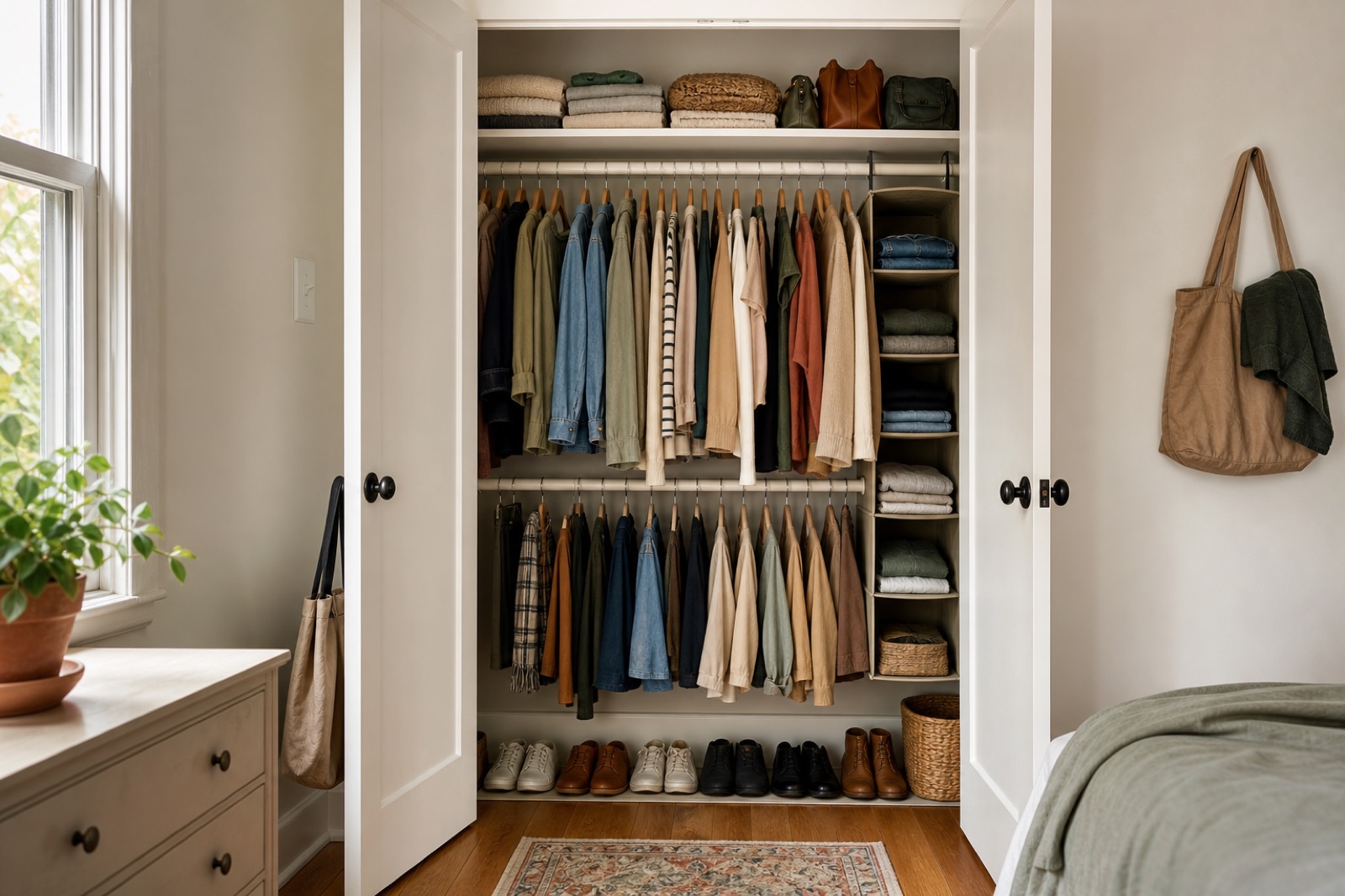
A small closet works when the most-worn clothes are visible and easy to return. Use the full height, but do not make everyday items depend on moving three other things first.
Research boundary
What this guide is—and is not.
This guide compares storage approaches using space planning, access, load, and installation constraints. It does not claim hands-on testing of a specific retail product. Any future product recommendation must satisfy the measurements and limitations stated below.
How our guides are prepared →A practical plan
Start with the space you have.
- 1
Remove anything that does not fit, is damaged, or belongs in another room.
- 2
Measure hanging lengths for shirts, pants, dresses, and coats separately.
- 3
Assign the easiest reach zone to the current season and weekly rotation.
- 4
Use high shelves for labeled, lightweight, infrequently accessed items.
Options worth comparing
Choose the product type after you measure.
These are product types to evaluate—not claims that one item will fit every home. Selected links open a current Amazon search so you can compare dimensions, installation details, availability, and recent customer feedback yourself.
As an Amazon Associate I earn from qualifying purchases.
Double-hang rod
- Best for
- Shirts and folded-over pants with unused lower space
- Check first
- Measure garment drop and the strength of the existing rod
- Limitation
- Not useful beneath dresses or long coats
Slim matching hangers
- Best for
- Reducing uneven bulk across a crowded rod
- Check first
- Choose a shoulder shape suited to the clothing
- Limitation
- Very thin hangers may crease heavy garments
Shelf divider
- Best for
- Keeping short stacks upright on a wide upper shelf
- Check first
- Confirm shelf thickness and vertical clearance
- Limitation
- Tall stacks still become unstable and hard to return
Low shoe shelf
- Best for
- Shoes used weekly when the closet floor is clear
- Check first
- Measure shoe depth, boot height, and door swing
- Limitation
- Reduces floor flexibility for luggage or a hamper
Easy mistakes
What to avoid
- Adding a second rod before measuring the drop of hanging clothes
- Storing heavy boxes above head height
- Using vacuum bags for materials that require breathable storage
Quick answers
Questions to settle before checkout
Do slim hangers make a big difference?
They reduce uneven bulk, but the bigger gain usually comes from removing unworn items and grouping garments by length.
What belongs on the top shelf?
Light, infrequently used, clearly labeled items. Anything heavy or needed weekly should be lower.
Should shoes stay in boxes?
Only if the material and storage conditions are appropriate and the label makes the contents easy to identify.
Editorial status
As an Amazon Associate I earn from qualifying purchases.
Full disclosure policy →