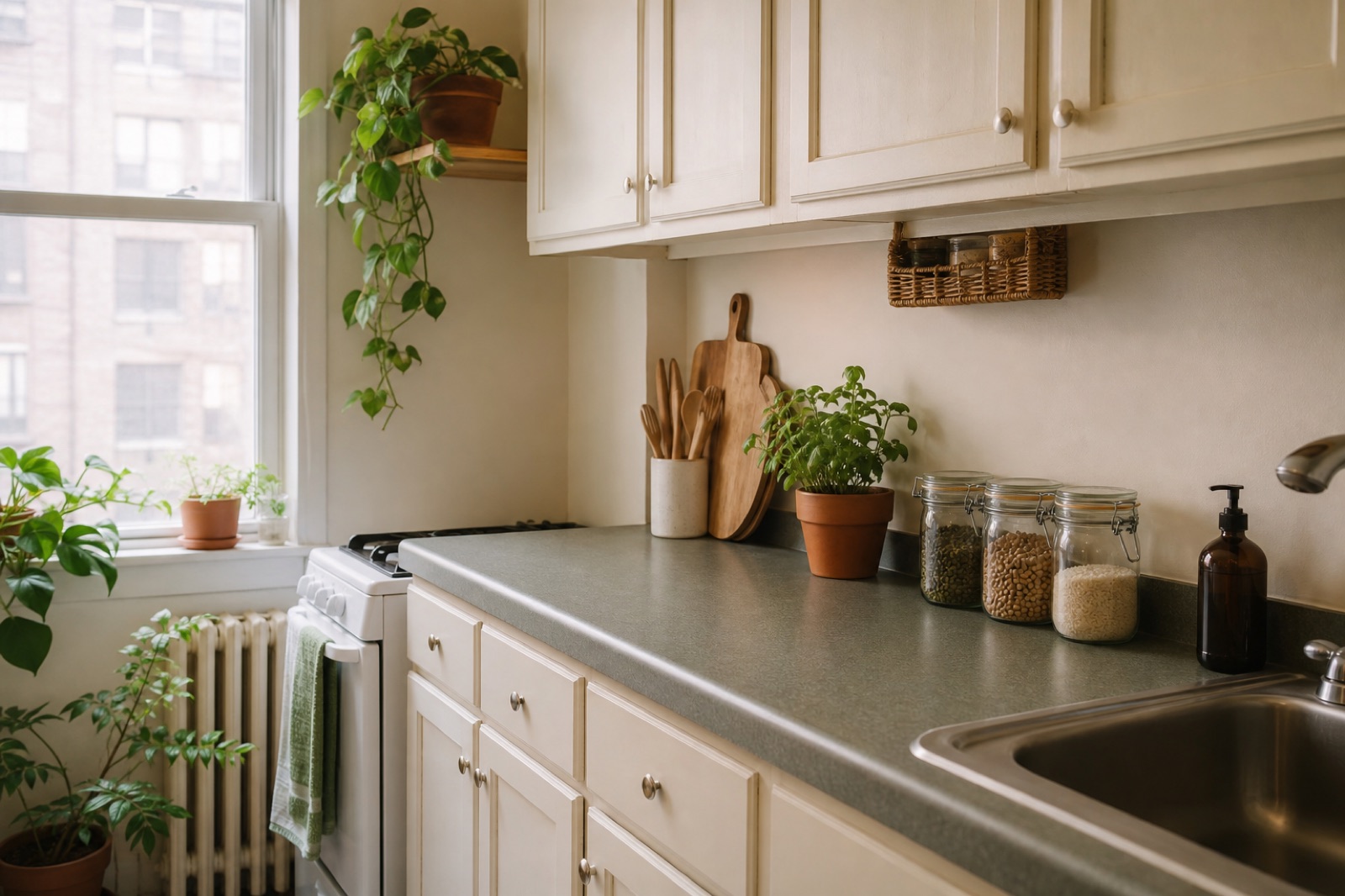
A small counter rarely needs more containers. It needs a clear job for every inch. Start by protecting one uninterrupted prep zone, then place only the items you reach for most often around it.
Research boundary
What this guide is—and is not.
This guide compares storage approaches using space planning, access, load, and installation constraints. It does not claim hands-on testing of a specific retail product. Any future product recommendation must satisfy the measurements and limitations stated below.
How our guides are prepared →A practical plan
Start with the space you have.
- 1
Measure the longest uninterrupted counter section and reserve at least 24 inches for food prep.
- 2
Move weekly-use appliances into a cabinet or onto a sturdy nearby shelf.
- 3
Group daily tools by task: coffee, cooking, washing, or food prep.
- 4
Use vertical storage only where it will not block an outlet, window, or cabinet door.
Options worth comparing
Choose the product type after you measure.
These are product types to evaluate—not claims that one item will fit every home. Selected links open a current Amazon search so you can compare dimensions, installation details, availability, and recent customer feedback yourself.
As an Amazon Associate I earn from qualifying purchases.
Two-tier counter shelf
- Best for
- Oils, salt, and small jars used every day
- Check first
- Measure the height below upper cabinets and the depth of your counter
- Limitation
- Open shelves show visual clutter and collect cooking residue
Slim utensil crock
- Best for
- A short list of frequently used cooking tools
- Check first
- Choose a weighted base and an opening wide enough for tools to fan out
- Limitation
- Becomes a junk holder if every utensil stays on the counter
Wall-mounted rail
- Best for
- Renters who can use approved adhesive or homeowners who can drill
- Check first
- Confirm surface compatibility and the loaded weight rating
- Limitation
- Not appropriate above heat, steam, or a food-prep splash zone
Appliance sliding tray
- Best for
- Heavy coffee makers or air fryers stored beneath cabinets
- Check first
- Match the tray footprint and load rating to the appliance
- Limitation
- Adds height and does not solve cord or ventilation requirements
Easy mistakes
What to avoid
- Buying a matching container set before deciding what actually belongs on the counter
- Storing knives or breakables where children can reach them
- Blocking required ventilation around heat-producing appliances
Quick answers
Questions to settle before checkout
How much counter should stay empty?
Aim for one continuous work zone at least 24 inches wide. A smaller clear zone is still useful, but it should be deliberate rather than whatever space remains.
Are tiered shelves stable enough?
They can be, but stability depends on the base, loaded weight, and counter surface. Keep heavy bottles on the bottom and recheck wobble after loading.
What should never live beside the stove?
Paper, plastic utensils, oils in direct heat, and anything that blocks appliance ventilation should be moved away from the cooking zone.
Editorial status
As an Amazon Associate I earn from qualifying purchases.
Full disclosure policy →