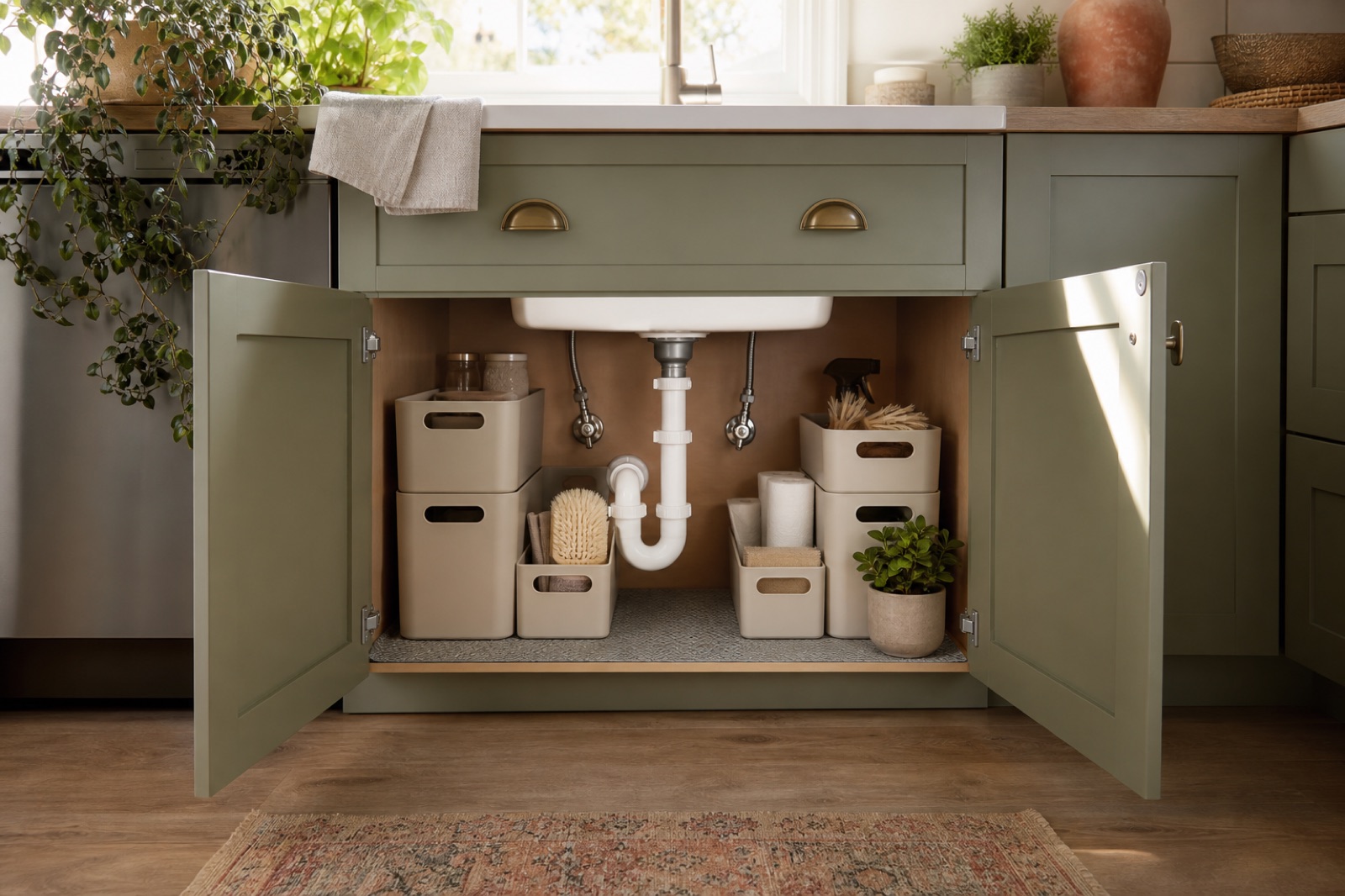
Under-sink cabinets are irregular, dark, and vulnerable to leaks. The best system is modular: it works around the plumbing, keeps chemicals separated, and can be removed in seconds when a pipe needs attention.
Research boundary
What this guide is—and is not.
This guide compares storage approaches using space planning, access, load, and installation constraints. It does not claim hands-on testing of a specific retail product. Any future product recommendation must satisfy the measurements and limitations stated below.
How our guides are prepared →A practical plan
Start with the space you have.
- 1
Empty the cabinet, inspect for moisture, and repair active leaks before adding storage.
- 2
Measure the clear zones on both sides of the trap, plus the usable door opening.
- 3
Assign one removable bin to each task rather than lining up individual bottles.
- 4
Keep a washable mat visible enough that a new leak will not stay hidden.
Options worth comparing
Choose the product type after you measure.
These are product types to evaluate—not claims that one item will fit every home. Selected links open a current Amazon search so you can compare dimensions, installation details, availability, and recent customer feedback yourself.
As an Amazon Associate I earn from qualifying purchases.
PXRACK adjustable 2-tier under-sink organizer (Large, 2-pack)
- Best for
- Cabinets with one or two clear side zones beside the plumbing
- Check first
- Compare the selected 15.9-inch depth, 11.8-inch width, and adjustable 13.6-to-16.9-inch height with pipes, valves, hinges, and the door opening
- Limitation
- The two-pack needs two usable zones, and either sliding tier can still conflict with a disposal, trap, or low valve
Handled cleaning caddy
- Best for
- Daily sprays and cloths that move room to room
- Check first
- Confirm the handle clears the drain pipe when lifted
- Limitation
- Tall bottles can tip if the caddy base is too narrow
Expandable shelf
- Best for
- Creating a bridge around low plumbing
- Check first
- Check shelf cutouts, leg positions, and loaded height
- Limitation
- Small loose items can fall through adjustable gaps
Waterproof cabinet mat
- Best for
- Containing small drips and making cleanup easier
- Check first
- Choose a size with a raised edge that still fits through the door
- Limitation
- A mat limits damage; it does not replace leak detection or repair
Easy mistakes
What to avoid
- Storing incompatible chemicals together or within reach of children
- Covering shutoff valves with a fixed organizer
- Packing the cabinet so tightly that a slow leak becomes invisible
Quick answers
Questions to settle before checkout
Should I use the cabinet doors for storage?
Only for light items, and only after checking hinge clearance and the gap between the closed door and cabinet contents.
What belongs in a portable caddy?
Keep only the products you use together. A lighter caddy is safer to lift and easier to remove during plumbing work.
Can food or pet supplies go under the sink?
Avoid storing consumables in a damp area near plumbing and household chemicals.
Editorial status
As an Amazon Associate I earn from qualifying purchases.
Full disclosure policy →